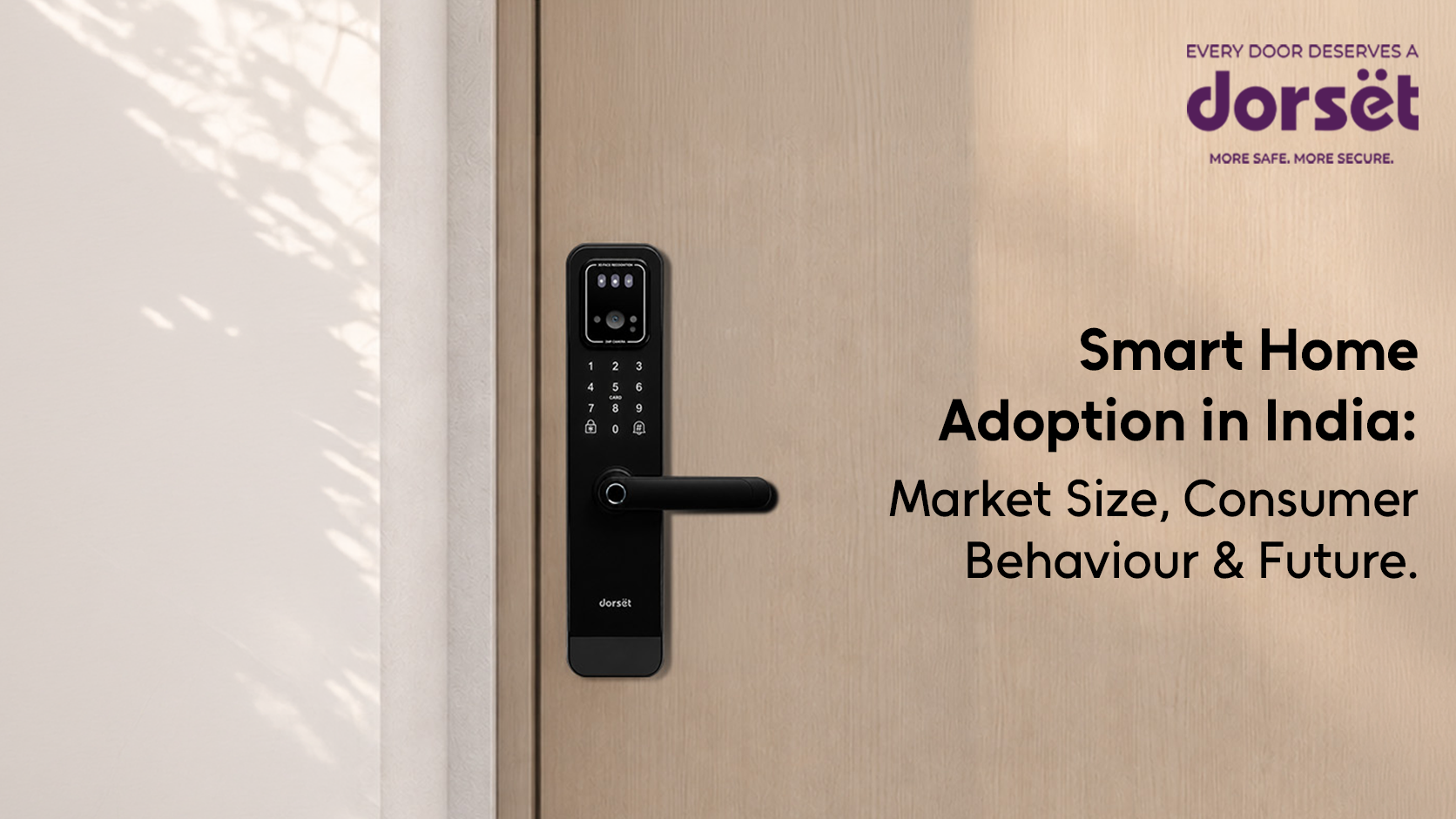
In the last few years, there has been a visible shift in what is considered premium in housing. Now, the focus is on creating “smart homes” or spaces that have better connectivity across home appliances, which is changing how people interact with their homes. From AI-enabled appliances and smart lighting to smart locks for doors, technology is becoming part of everyday home design.
This shift has significantly boosted the growth of the Indian smart home market, which in turn is contributing to the introduction of more innovative solutions that make a home more connected and efficient.
Why Are More Indians Choosing Smart Home Solutions?
India’s Smart Home Market Is Growing Rapidly
Smart home technology is moving from a premium feature to a more familiar part of modern Indian homes. According to Mordor Intelligence, the India smart home market is estimated at USD 6.71 billion in 2026 and is projected to reach USD 24.1 billion by 2031, growing at a 29.12% CAGR between 2026 and 2031.
The growth covers solutions across home security, smart appliances, lighting, energy management, climate control, entertainment, and connected devices. Security and surveillance currently account for the largest product share, while energy and climate control are also expected to see strong growth.
What Is Driving the Shift Towards Smart Homes?
The growing market reflects changing expectations from Indian homeowners. As technology becomes more accessible and connected, people are looking for homes that do more than provide comfort. They want greater control, convenience, security, and efficiency in their everyday routines.
Some of the key factors driving this shift include:
- Greater convenience: Smartphones, apps, and voice assistants make it easier to control connected devices without manually operating each one.
- Stronger home security: Smart cameras, locks, sensors, and connected security systems are becoming important entry points into home automation. Security and surveillance devices accounted for 36.02% of the market in 2025, according to Mordor Intelligence.
- More affordable technology: Falling sensor and connectivity costs are helping make smart devices accessible to a wider range of homeowners, beyond the premium segment.
- Energy management: Smart appliances and connected climate-control systems can help homeowners monitor usage and manage energy more efficiently, making technology relevant to both convenience and everyday savings.
- Better connectivity: Wider smartphone, Wi-Fi, and 4G/5G adoption is making it easier for connected devices to communicate and be controlled remotely. Wi-Fi accounted for 63.80% of the market in 2025.
Is Convenience Driving Smart Home Adoption?
Convenience remains one of the strongest reasons consumers consider smart home products. This includes everything from controlling lights and appliances to managing access, storage, and entertainment systems.
The convenience factor can be seen across several categories:
- Smart lighting: Lights can be controlled remotely, scheduled, or adjusted according to requirements.
- Connected appliances: Certain appliances can offer remote controls, notifications, and automated functions.
- Voice assistants: Voice-based controls can connect compatible devices and reduce the need for manual operation.
- Smart entertainment: Connected televisions, speakers, and streaming devices can create a more integrated entertainment setup.
- Automated home security systems: Smart door locks can work together through a connected ecosystem.
That said, it’s important not to mistake the need for innovative solutions for a race to hoard smart devices. They are simply looking for fewer yet better alternatives that solve everyday problems without making their homes more complicated.
How Is Smart Technology Changing Home Security?
Security is another important area where smart technology is changing expectations. Traditional security solutions continue to have a role, but connected systems can further improve security by providing reliable surveillance and access control.
Modern security-focused solutions can include:
- Digital door locks with multiple access points that reduce dependence on conventional keys.
- Video doorbells and cameras that support remote monitoring.
- Motion sensors that can detect activity around important areas.
- Mobile notifications that keep users informed about every entry and exit.
Door hardware is now becoming a part of the larger connected-home experience. Instead of being seen as just a physical component, modern door hardware can bring access, security, and technology together. At the same time, well-designed door fittings continue to improve the ease of use and overall look of modern entrances.
Can Smart Homes Help Use Space Better?
Creating a smart home involves more than just electronics. It also includes innovations that influence the way storage, furniture, and kitchen spaces are designed. The focus is increasingly shifting towards making available space more functional without compromising appearance.
Smart and functional home systems can include:
- Automated storage solutions: Systems can make frequently used storage areas easier to access.
- Drawer systems: Smooth and organised movement can improve everyday usability.
- Lift-up mechanisms: These can help make better use of vertical storage.
- Pantry and corner solutions: Specialised systems can improve access to difficult-to-reach areas.
- Connected kitchen systems: Appliances and storage can be planned as part of a more integrated setup.
These developments show that smart living is not only about electronic devices. It can also involve better planning of the physical elements that make a home easier to use.
What About Privacy and Personal Storage?
As more household products become connected, privacy and data security are becoming important considerations. Smart devices can collect information about how they’re used, preferences, and connected activities, making it important for homeowners to understand how their devices handle data.
Before adopting connected products, homeowners should consider:
- Data protection: Understand what information a device or app collects.
- Account security: Use strong passwords and secure authentication methods.
- Software updates: Keep connected devices updated to address security and performance issues.
- Device permissions: Review which functions and information an application can access.
- Ecosystem compatibility: Check whether different devices can work securely with existing systems.
Is Smart Home Adoption About More Than Technology?
The growth of smart homes is changing the way people design and experience their living spaces. Today, technology is expected to fit naturally into a home's interiors instead of looking separate or out of place. As a result, homeowners are looking for products that offer everyday functionality, long-lasting performance, and a design that complements their spaces.
This can be seen across different parts of the home, including:
- Door hardware that matches modern interior styles.
- Furniture hardware that makes everyday use smoother and more convenient.
- Kitchen systems that help make better use of available storage space.
- Smart security products that add convenience and protection to modern entrances.
- Connected appliances that bring technology into everyday household tasks.
In this changing environment, door hardware is no longer seen as just a basic functional requirement. Its design, finish, and ability to work alongside other home systems can influence how well it fits into a modern living space. Similarly, well-designed door fittings can make doors easier to use while also maintaining a consistent and polished look throughout the home.
How Is Consumer Behaviour Changing?
As smart-home technology becomes more common, The way consumers choose smart locks is also changing. Buyers today are more likely to research products before making a purchase. They want to understand the features, check whether a product will work with their existing devices, and compare options online.
Some key changes in consumer behaviour include:
- Greater focus on useful features rather than technology for its own sake.
- More attention to whether different smart devices can work together.
- Increased comparison of prices, warranties and after-sales support.
- Greater reliance on online reviews and product information.
- A preference for products that offer real everyday convenience instead of unnecessary features.
This means brands need to explain smart-home products in simple and practical terms. Consumers want to know what a product can do for them, how easily it will fit into their home and existing setup, and whether it will continue to be useful in the long run.
What Can We Expect From the Future of Smart Homes in India?
The future of smart homes in India is likely to focus more on better connectivity and products that work together seamlessly. That means, instead of managing multiple devices separately, homeowners are now favouring connected systems that make everyday tasks simpler and more convenient.
Some future developments may include:
- AI-powered automation that can adapt to everyday routines and preferences.
- More connected appliances across kitchens and living spaces.
- Integrated security systems that bring together access control, cameras and sensors - a shift well reflected in the growing demand for digital locks in Indian real estate.
- Smarter energy management based on household usage patterns.
- Better compatibility between products from different smart-home ecosystems.
- Simpler controls through voice commands, mobile apps and automated systems.
The overall direction is clear: smart homes are likely to become less about owning individual gadgets and more about creating connected systems that work together smoothly.
The Future Is About Smarter Choices, Not Just More Technology
Smart homes in India are no longer just about adding more connected gadgets. The focus is shifting towards technology that makes everyday living safer, simpler, and more efficient. From lighting and appliances to security, kitchen systems, and door hardware, smart solutions are becoming part of the modern home. The future belongs to products that work seamlessly, offer real value, and make everyday life genuinely more convenient.
FAQ’s
1. Why is smart home adoption growing in India?
Smart home adoption is growing as consumers seek greater convenience, security, automation, and control. Better connectivity and smartphone use are also supporting adoption. Dorset contributes to this shift through digital locks offering multiple access methods and selected smart-home integrations for modern homes.
2. What smart security features are Indian homeowners considering?
Indian homeowners are increasingly considering biometric access, PIN entry, RFID, mobile control, video features, and connected security. Dorset’s digital range includes models with combinations of these technologies, helping users choose access options based on their security and convenience needs.
3. How do Dorset digital locks fit into smart homes?
Dorset digital locks can support connected living through features such as mobile access, Wi-Fi, VDP integration, and selected voice-assistant compatibility. Depending on the model, users can combine convenient entry methods with broader home-automation or security setups.
4. Are smart homes only about connected appliances?
No. Smart homes increasingly combine security, lighting, appliances, access, and storage for greater convenience. Dorset contributes beyond digital locks through furniture fitting and kitchen hardware solutions, helping homeowners improve physical-space functionality alongside connected home technology for more practical everyday living.
5. What should consumers consider before adopting smart home products?
Consumers should consider compatibility, ease of use, security, installation, battery requirements, service support, and long-term value. Dorset’s digital lock range offers different access technologies and door compatibility options, helping buyers select solutions based on their specific home requirements.