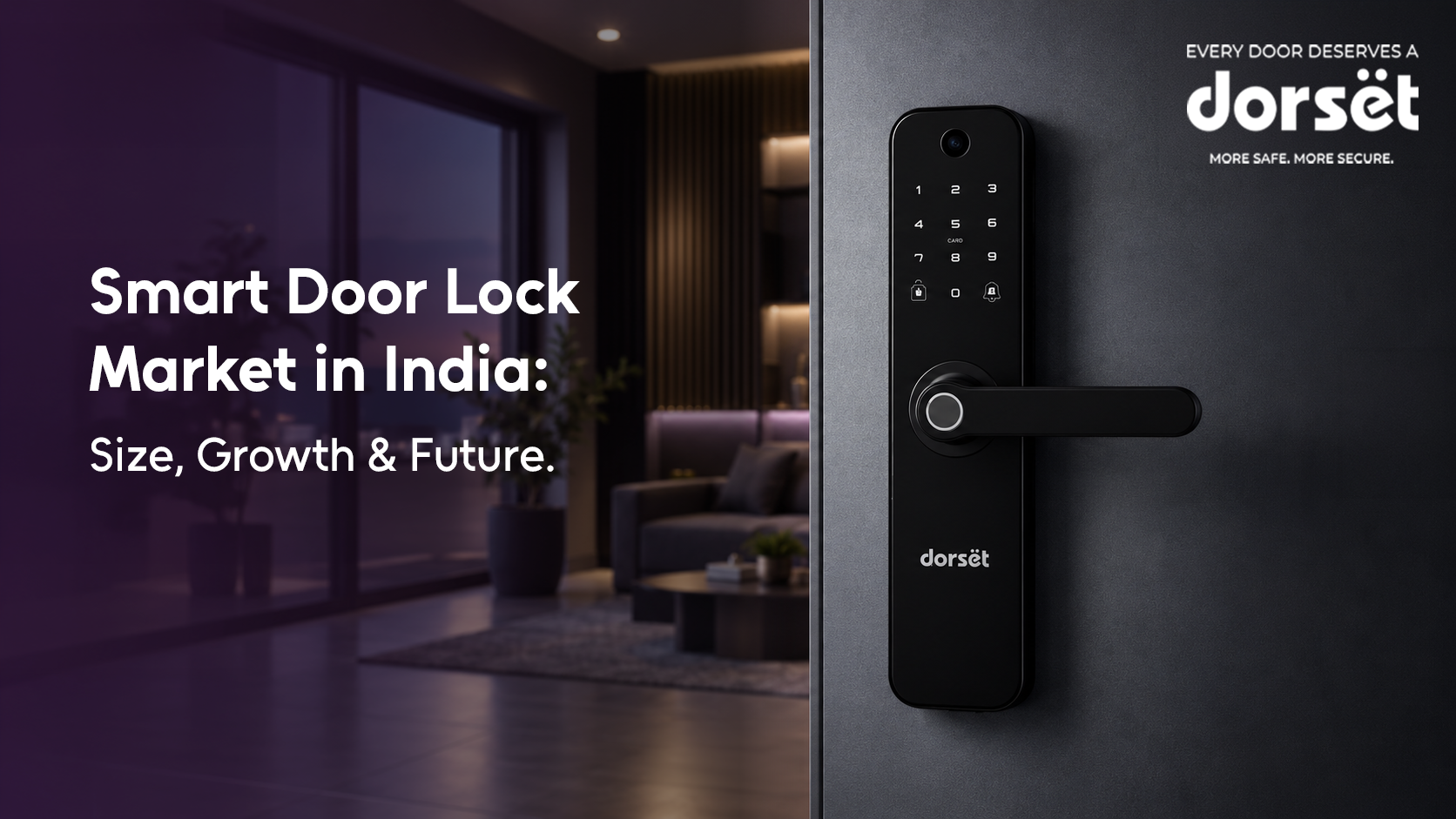
The way Indians secure their homes is changing. Traditional keys remain common, but connected security is easier to access. According to research published by Custome Market Insights, the India smart lock market is expected to record a CAGR of 26.73% from 2026 to 2034 and reach USD 333.46 million by 2034. Factors such as growing security awareness, urbanisation, smartphone use, and smart-home adoption are pushing the category forward.
Fingerprint access, PIN entry, mobile control, and video features are giving buyers more ways to manage entry. The shift also reflects growing interest in flexible access, connected homes, and security products that can suit changing household needs. This makes product choice more relevant for modern homes.
Why Is the Smart Lock Market Growing in India?
The growth is about changing security needs - a trend also covered in detail in the growing demand for digital locks in Indian real estate. Indian buyers want products that are simple to operate and fit daily routines. Better internet access is making connected security more practical.
Key factors include:
- Greater home-security awareness.
- Rising smart-home adoption.
- Wider smartphone and internet use.
- Demand for key-free access.
For buyers looking for smart locks for home, the choice now includes fingerprint, PIN, and mobile access.
Is Convenience Driving Consumer Demand?
Convenience is a major reason people consider a smart door lock. Forgetting keys, sharing access, or checking whether a door is secured can become easier when one product offers multiple access methods.
Depending on the model, buyers can look for:
- Fingerprint access.
- PIN entry.
- RFID cards.
- Mobile access.
Dorset's ZEST+ DG 206 combines 3D face recognition, palm vein scan, 360° fingerprint, RFID, PIN, mechanical key, and optional Wi-Fi mobile access. It supports VDP and home automation integration and suits doors from 35–100 mm.
What Features Are Shaping the Market?
Buyers are looking for features that offer security and ease of use. A digital lock for the main door is now expected to offer more than key replacement.
Look for:
- Biometric access.
- Mobile control.
- Wi-Fi or Bluetooth.
- RFID access.
- Video integration.
For instance, Dorset's DG 205 offers 3D face recognition, 360° fingerprint, password, RFID, mobile access and mechanical key support, plus Wi-Fi, VDP integration and Amazon Alexa and Google Assistant compatibility.
Are Smart Homes Creating New Opportunities?
Smart locks are becoming part of a wider connected-home setup. Security can work alongside other smart devices instead of operating separately.
This creates opportunities for:
- Home automation integration.
- Remote access and control.
- Security notifications.
When comparing an electronic door lock, check compatibility as carefully as the feature list. The product should suit the door and preferred controls.
Which Smart Lock Types Are Gaining Attention?
Different doors need different locking systems. That’s why the selection depends on door type, security level, access method, and installation space.
Common categories include:
- Mortise-based systems for main doors.
- Lever handle systems for easy operation.
- Deadbolts for suitable doors.
- Padlocks for specific uses.
For buyers who prefer simple keyless access, a keypad lock can be a practical choice. However, choosing the right model also means checking the door's measurements and installation requirements. These factors are equally important when selecting door fittings, as the right size and fit ensure smooth and reliable operation.
Does Connectivity Affect the Choice?
Yes. Connectivity affects how the lock works with a phone or smart-home system. Bluetooth and Wi-Fi are two common choices.
The basic difference is:
- Bluetooth supports nearby mobile control and can use less power.
- Wi-Fi enables remote connectivity, app control, and notifications.
- Zigbee, Z-Wave, and NFC support specific needs.
Smart door locks like the Dorset DG 203 PRO offer BLE, mobile access, RFID, password, 360° fingerprint, mechanical key support, and VDP integration. It suits doors from 35–90 mm.
Where Is the Market Growing?
Residential use is important, but smart security is also used in commercial, hospitality, institutional, and industrial spaces.
The main segments include:
- Residential: Home security and keyless entry.
- Commercial: Offices, retail, and hospitality.
- Institutional: Controlled-access spaces.
- Industrial: Warehouses and restricted areas.
For residential buyers, smart locks for home combine convenience with access control. Commercial users may focus more on permissions and monitoring. Across applications, door hardware should balance security and usability.
Is E-Commerce Changing How Indians Buy Smart Locks?
Yes. Online platforms make products easier to compare, while physical stores help with fit and installation. Both channels are expanding access to smart security.
Before choosing door hardware, compare specifications, compatibility, service, and overall value.
What Does the Future Look Like?
The future is likely to focus on better connectivity and smart-home integration. AI, IoT, and cloud systems can support facial recognition, voice control, and tamper alerts.
Affordability will remain important. Indian buyers will continue to balance security, convenience, battery life, durability and price. A digital lock for the main door will increasingly be judged by how well it fits into the wider home.
What Should Buyers Check Before Choosing One?
Start with the door, not just the feature list. Check:
- Door thickness and lock compatibility.
- Access methods and backup entry.
- Connectivity and battery needs.
- Installation, warranty, and service.
Conclusion
India's smart lock market is moving from a niche technology category towards a broader security solution. Rising awareness, smart-home adoption, e-commerce, and better connectivity are giving consumers more choices. Whether the priority is a keypad lock, biometric access, or mobile control, buyers should focus on compatibility and support. Overall, as adoption grows, the electronic door lock is set to become a more familiar part of modern Indian homes and spaces.
FAQ’s
1. Why is the smart door lock market growing in India?
The market is growing as Indian consumers increasingly value convenience, keyless access, home security, and smart-home features. Dorset’s digital lock portfolio responds with options including biometric access, PINs, RFID, mobile control, and connected features across different models.
2. Which features are becoming popular in smart door locks?
Fingerprint access, PIN entry, RFID, mobile control, facial recognition, and connected features are gaining attention. Dorset’s ZEST+ range includes models offering combinations of these technologies, allowing homeowners to choose access methods according to their security, convenience, and connectivity needs.
3. What does the Dorset DG 206 offer?
The Dorset ZEST+ DG 206 combines 3D face recognition, palm vein scanning, 360° fingerprint access, PIN, RFID, mechanical key, mobile access, and Wi-Fi. It also supports VDP integration and suits doors with thicknesses between 35 and 100 millimetres.
4. How is the DG 205 different from the DG 206?
Both Dorset models provide multiple access methods, including 3D face recognition, fingerprint, password, RFID, mobile access, and mechanical key support. The DG 205 also supports Wi-Fi, VDP integration, and voice-assistant compatibility, while the DG 206 adds palm vein scanning.
5. What should buyers consider when choosing a smart door lock?
Buyers should consider door thickness, preferred access methods, connectivity, battery needs, backup entry, installation, warranty, and service support. Dorset offers multiple digital lock models, helping users select a solution that matches their door, lifestyle, security needs, and budget.