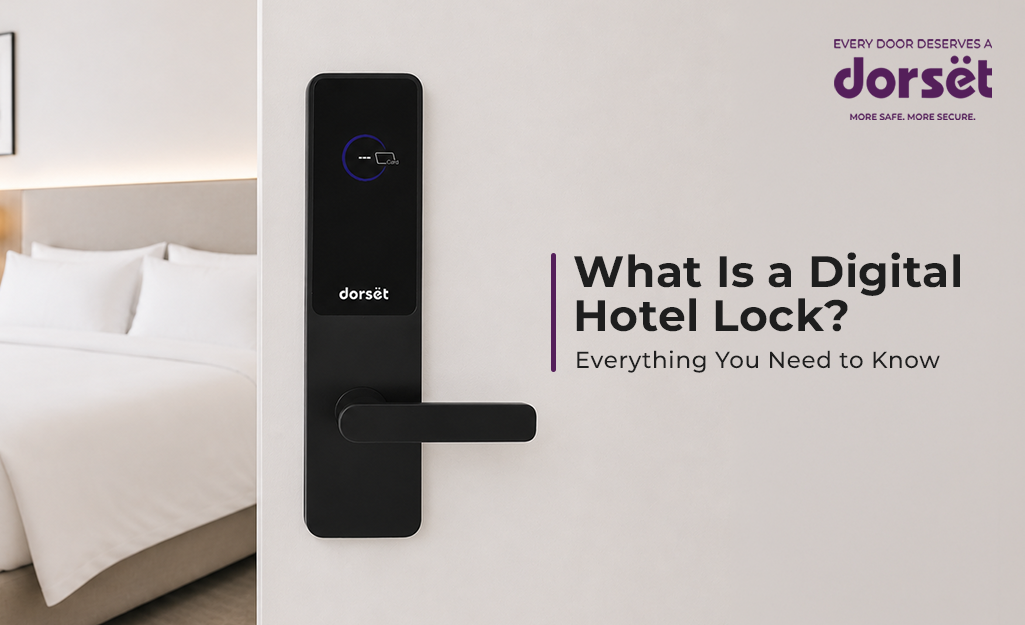
The hospitality industry has undergone a seismic shift in recent years. At the heart of this transformation is the digital hotel lock. For hotel owners and facility managers, the transition to electronic access control is not just about keeping up trends, it is about operational excellence. A robust hotel door lock system provides layers of security and data driven management that were previously unimaginable.
What is a Digital Hotel Lock?
A digital hotel lock is an electric access control device designed specifically for the hospitality sector. Unlike traditional mechanical locks that rely on physical pins and tumblers to verify a key, a digital lock uses encrypted credentials. When a guest presents these credentials, the lock communicates with a central database or an internal controller to verify authorization. If the credentials match, the lock engages, allowing entry.
Understanding the Hotel Door Lock System
When we speak about a hotel door lock system, we aren’t just talking about the handle on the door. We are referring to an integrated ecosystem. A professional grade system typically consists of three primary components, the lock hardware, the credential, and the management software.
The hardware is the visible part that guests interact with, and the mortise or latch mechanism. The management software is integrated into the hotel’s property management system. When the receptionist checks a guest in, the PMS communicates with the encoder. The encoder writes the room number, expiration date, and security permissions onto the guest’s key.
A well designed hotel door lock system does more than just open doors. It serves as an audit tool. It logs every single entry attempt. This accountability is a massive deterrent against theft and a crucial asset for hotel security.
Featured Doreset Lodging Systems: Signature, Trillion
To achieve this level of security and sophistication, choosing the right hardware is key. Dorset offers industry leading solutions specifically tailored to meet the rigorous demands of the hospitality sector.
- Signature Series: This collection represents a blend of aesthetic elegance and high-tech security. It is an ideal choice for luxury properties looking to provide a premium guest experience.
- Trillion: Engineered for robust performance and seamless integration, the Trilliom series secures long term reliability even in high traffic environments.
These systems utilize RFID (Radio Frequency Identification) technology, which employs electromagnetic fields to automatically identify and track credentials. In a hospitality setting, an RFID hotel lock communicates with the key card via radio waves, offering a far more stable and secure connection than traditional magnetic stripe cards.
Technical Advantages and Operational Benefits of Modern RFID Systems
The transition to these advanced lodging systems provides several operational advantages that enhance both staff efficiency and guest satisfaction:
- Enhanced Durability: Because there are no moving parts in the card and no physical swiping required, there is significantly less wear and tear on both the cards and the internal readers.
- Advanced Security Protocols: These systems utilize complex encryption, making the credentials virtually impossible to clone or replicate compared to older technology.
- Universal Access Versatility: These locks can be programmed to facilitate a "one-card experience," allowing guests to use a single credential for their room, the fitness center, spa facilities, or elevators.
Maintaining Your System
When you look at what is hotel card lock maintenance, it really boils down to three things:
- Battery Management: Replacing batteries proactively based on software alerts.
- Software Updates: Keeping the hotel’s access control server updated to ensure security protocols are current.
- Physical Inception: Occasionally checking that the door closer and latch are aligned, as electronic locks need a smooth closing door to function optimally.
Key Features to Look For
If you are a property manager planning an upgrade, there are specific features you should demand from your vendor:
- Audit Trails: Ensure the digital hotel lock saves a substantial log of entries. This is non-negotiable for security and liability reasons.
- Panic Release: Always ensure the internal handle is mechanically connected to the latch. In case of a fire or emergency, a guest must be able to exit the room by simply turning the handle, regardless of whether the electronic system has power.
- Emergency Overrides: Even the best systems need a plan B. Look for locks that allow for an emergency mechanical key or an external power port to jump start the lock if the internal batteries die completely.
- PMS Integration: Your locks should talk to your property management system. If they operate in a silo, your staff will waste hours manually encoding cards. Integration automates this, syncing room assignments directly to the lock.
The Future of Hotel Access
As we look toward the future, the RFID hotel lock will likely be joined by even more sophisticated tech. We are already seeing the integration of biometrics, where a face detection lock uses a guest's fingerprint or facial profile as their key. We are also seeing the integration of IoT devices, where the moment the lock detects the guest, it triggers the lights to turn on and the AC to reach the guest’s preferred temperature.
Investing in a quality digital hotel lock is not an expense; it is a long-term investment in your property's reputation. When guests don't have to think about their door lock, you know you have done your job right. They should feel safe, they should feel welcome, and most importantly, they should feel that their privacy is respected. That is the true power of a modern access control system.
FAQs
1. What is a digital hotel lock?
A digital hotel lock is an electronic access control device that replaces traditional mechanical keys with encrypted electronic credentials. These locks communicate with a central management system to verify authorization, granting entry only when valid credentials—such as key cards, mobile devices, or biometrics—are presented.
2. Why are RFID hotel locks preferred over older magnetic stripe technology?
RFID hotel locks are preferred for their superior durability and security. Unlike magnetic stripe cards that require physical contact and are prone to demagnetization or wear, RFID technology uses radio waves, which eliminates mechanical friction and allows for complex encryption that makes card cloning virtually impossible.
3. How does the hotel door lock system maintain accountability and security?
Security is maintained through an integrated management software that logs every entry attempt. Each key credential provides a specific audit trail, allowing hotel management to identify exactly which card accessed a room and at what time, serving as a critical deterrent against theft and unauthorized entry.
4. What procedures exist if the batteries in a hotel door lock fail?
Most systems include low-battery monitoring within the management software, ensuring staff can replace batteries proactively. In the event of a total power failure, locks are equipped with fail-safes such as external power ports for jump-starting the system or mechanical override keys to ensure emergency access remains possible.
5. Can a hotel card lock be integrated with other property amenities?
Yes, RFID hotel locks are highly versatile and can be programmed to grant access to multiple areas of a property. This functionality enables a "one-card" experience where a single credential functions not only for the guest room but also for elevators, parking garages, fitness centers, and spa facilities.