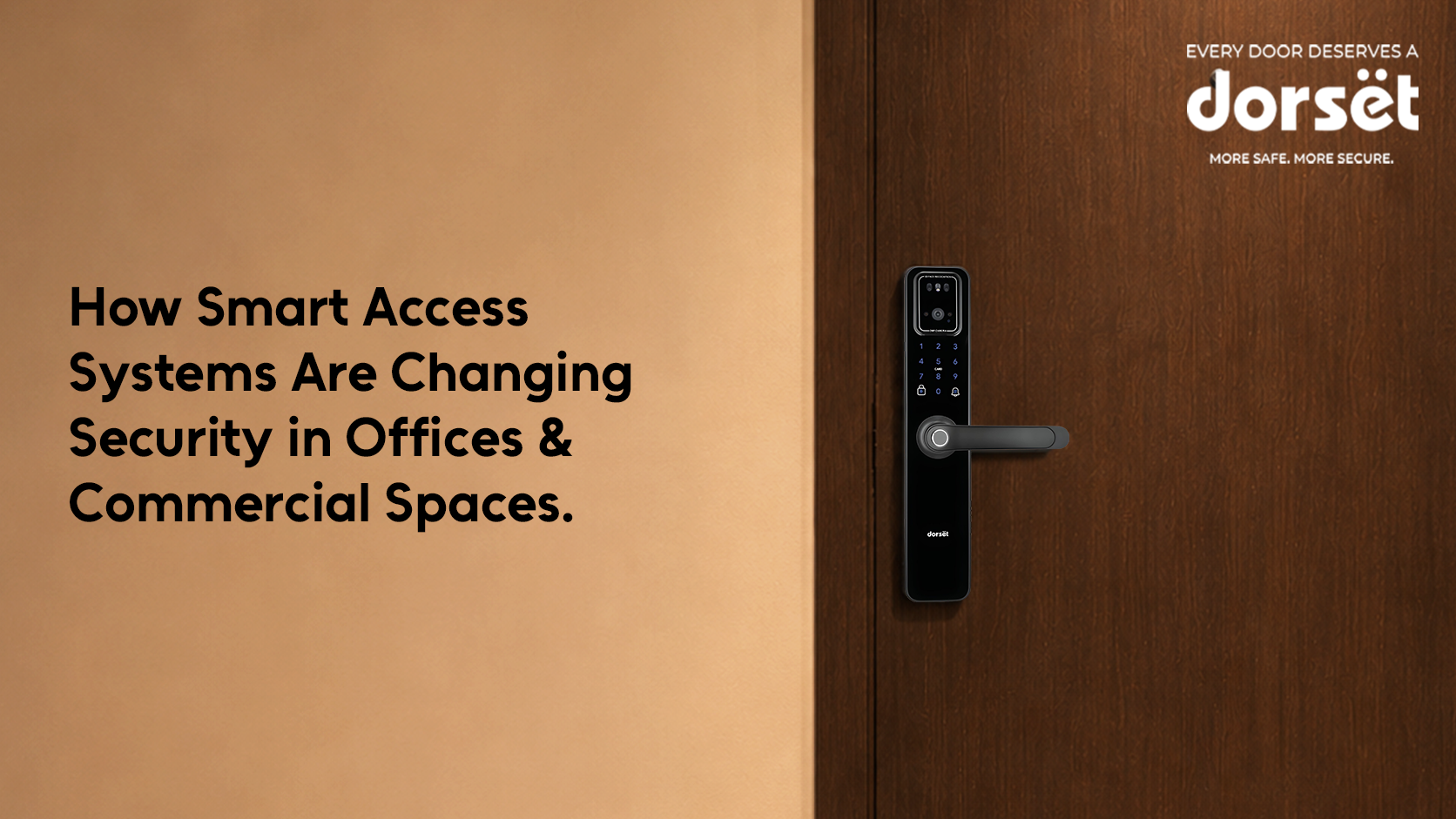
In Indian offices and commercial spaces where employees, visitors, vendors, and service teams move in and out regularly, managing access has become an important part of daily operations. This is why businesses need security solutions that are easy to use and reliable. An electronic door lock helps meet this need by offering modern entry options that go beyond traditional keys.
Why Are Offices Moving Towards Smarter Access Systems?
Think about a busy office where employees arrive at different times, visitors attend meetings, and housekeeping teams enter certain areas. For a workplace with more than thirty employees, managing physical keys for every person is next to impossible. Plus, accounting for lost keys, unauthorised copies, and the need to change locks can create extra work for facility managers.
This is where smart access systems make a difference. Depending on the access modes, employees can enter using a fingerprint, PIN, RFID card, or mobile access instead of relying only on a physical key.
For businesses, this benefits them in ways such as:
- Convenient entry: Multiple access methods make everyday entry easier.
- Better access management: Different methods can suit different users and workplace needs.
- Less dependence on keys: Digital entry options reduce common problems linked to lost or duplicated keys.
- A modern workplace: Smart locking solutions support the needs of today's offices and commercial buildings.
The goal is simple: make access easier for authorised users while helping businesses manage entry more carefully.
How Is Office Security Changing in India?
Indian workplaces are adapting to changing work schedules, shared office spaces, and flexible attendance. A company may have employees working in shifts, teams using meeting rooms at different times, and visitors arriving throughout the day. These patterns make it important to choose a locking solution that suits the building's actual needs.
A report published by Forbes highlighted the return to office-based work. As per their findings, 59.1% of full-time employees worked exclusively from the office, while another 28.2% followed a hybrid model.
These figures highlight the need for Indian offices to plan security around their employees' working patterns. An electronic door lock offers convenient entry options, while clear access rules help businesses control who can enter restricted areas.
How Do Smart Locks Help Protect Sensitive Areas?
Not every room in an office needs the same level of access. A reception area welcomes visitors, so it needs to be open, while areas such as server rooms, finance departments, records rooms, and management cabins need tighter control.
That’s why choosing the right commercial access control solution starts with understanding these different requirements.
Here are some practical examples:
- Meeting rooms: Access options can make entry easier for employees and approved visitors.
- Server rooms: Restricting access to authorised personnel can help protect important equipment.
- Finance departments: Suitable locking arrangements can help secure records and sensitive documents.
- Management cabins: Digital entry options can support privacy and controlled access.
A biometric door lock, such as one with fingerprint or facial recognition, can add another layer of identity checking. However, businesses should remember that a smart lock alone cannot prevent every security risk. Clear access policies, careful user management, and regular security checks remain important.
What Features Should Businesses Look for in a Digital Lock?
Choosing a lock for an office or commercial building involves more than selecting a modern design. Businesses should consider who needs access, how often the door is used, and what level of security the space requires - our security upgrade guide covers the key features worth prioritising.
For example, Dorset's Vogue+ DG 405 and Zest+ DG 206 offer features that can suit different access needs.
- Vogue+ DG 405 Push-Pull Digital Door Lock: It supports palm vein scanning, fingerprint recognition, PIN, RFID card, mobile access, and a mechanical key. Its integrated camera, Wi-Fi capability, and optional video door phone integration add further convenience.
- Zest+ DG 206 Mortise Digital Door Lock: It offers 3D face recognition, palm vein scanning, fingerprint recognition, PIN, RFID card, mobile access, and a mechanical key. Its integrated video display and surveillance camera provide additional visibility at the entrance.
How Can Smart Locks Make Daily Office Operations Easier?
Security should support everyday work, not slow it down. Imagine an employee arriving for an early meeting or a manager needing to check the office after regular hours. Multiple unlocking options can make entry more convenient for authorised users.
A digital door lock reduces the need for physical keys and makes office entry more convenient. Wi-Fi-enabled models with mobile access offer added flexibility where supported. Choosing the right smart door locks can help facility managers simplify access while meeting workplace security needs.
Before selecting a lock, businesses should consider the features they need, such as remote access, camera functions, biometric entry, and compatibility with other systems.
How Can Businesses Prepare for Future Security Needs?
As offices grow, their access needs also change. A business may add more employees, move to a larger space, or introduce flexible working hours. Selecting adaptable commercial access control solutions can help businesses plan for these changes.
Hence, before choosing a system, consider the door type, installation needs, available power and connectivity, backup entry options, and future maintenance. Where mobile or connected features are required, confirm that the product supports the intended setup.
Build a Smarter Workplace with Dorset
Office security is about more than keeping doors locked. It is about helping authorised people enter conveniently while protecting private spaces and important assets. The right electronic door lock can support this balance through biometric access, multiple unlocking options, and useful monitoring features.
Explore Dorset's DG 405 and DG 206 to understand which features best suit your office or commercial space. With the right smart access systems, businesses can take a practical step towards more convenient entry, better access management, and a workplace prepared for changing needs.
FAQs
1. How can Dorset electronic door locks improve office security?
Dorset electronic door locks offer multiple access options, including biometric authentication, PINs, RFID cards, and mechanical keys, depending on the model. These features help businesses manage entry more conveniently while supporting access control for offices and restricted commercial spaces.
2. Which Dorset digital locks are suitable for modern commercial spaces?
Dorset's VOGUE+ DG 405 and ZEST+ DG 206 offer different access features for modern workplaces. Businesses can compare their biometric options, connectivity, camera features, and entry methods to select a lock suited to their requirements.
3. How does the Dorset VOGUE+ DG 405 support convenient office access?
The Dorset VOGUE+ DG 405 supports palm vein scanning, fingerprint recognition, PIN, RFID card, mobile access, and mechanical key entry. Its integrated camera and Wi-Fi capability offer additional functionality, depending on the configuration and connected features.
4. Why should businesses consider access requirements before choosing Dorset smart locks?
Different office areas require different levels of access control. Businesses should assess employee movement, restricted rooms, door compatibility, connectivity, and backup entry options before selecting Dorset digital locks that suit their operational and security requirements.
5. Can Dorset smart access systems support changing workplace requirements?
Dorset digital locks offer multiple entry methods, with selected models supporting connected features. Businesses should review available functions, installation requirements, and compatibility before purchasing to ensure the chosen solution meets their current access needs and anticipated workplace changes.