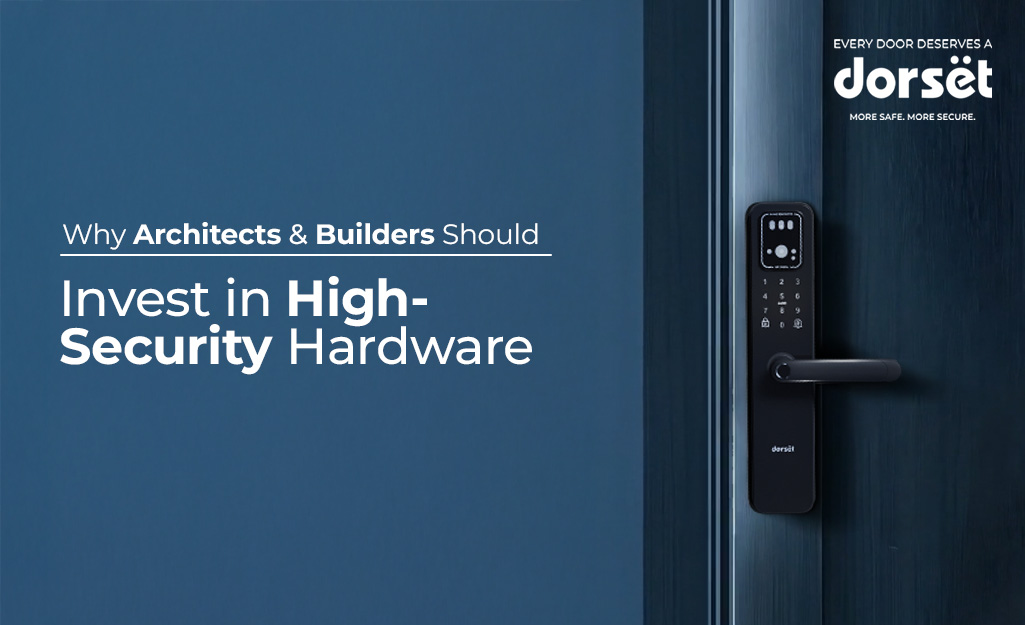
Security has become a key architectural decision that influences how a space functions, feels, and protects its occupants. Today, architects and builders are expected to deliver environments that balance safety, durability, efficiency, and visual clarity. From advanced digital locks to precision-engineered door closers, every hardware choice plays a role in how well a building performs over time.
At Dorset, we view high-security hardware as a complete ecosystem. Digital locking systems form the first line of defence, supported by reliable mechanical hardware to give consistency, control, and long-term performance.
The Growing Need for Smarter Security
Buildings today handle higher footfall, tighter safety norms, and more complex access needs than ever before. Residential towers, offices, hospitals, hotels, and mixed-use developments all require smarter ways to manage entry without compromising convenience.
This is why digital locks have become central to modern security planning. Features like biometric access, mobile control, audit trails, and keyless entry help architects and builders deliver safer spaces with greater control.
Durability That Supports Long-Term Value
Investing in premium digital locks and security hardware directly impacts a building’s long-term value. Dorset’s digital locks and mechanical systems are designed to withstand frequent usage without performance drop-offs.
For builders, this means fewer post-handover complaints related to lock failures or access issues. For architects, it makes sure that the design intent remains intact, without visible wear or outdated hardware disrupting the space. Durable digital locks paired with high-quality mechanical components reduce replacement cycles and long-term maintenance costs.
Ease of Installation and Project Efficiency
Modern digital locks are no longer complex add-ons. They are designed to fit in seamlessly with modern doors and construction practices. Standardised fittings, compatibility with different door materials, and clear installation frameworks help simplify execution on site.
Efficient installation reduces labour time, minimises errors, and delivers consistent performance across multiple units or floors.
Advanced Locks as Part of a Complete Security System
Digital locks are most effective when supported by a well-planned door hardware ecosystem. While smart locks provide access control, monitoring, and convenience, mechanical components like hinges, latches, and door closers allow for physical stability and long-term reliability.
From biometric digital locks for main doors to controlled access systems for commercial spaces, modern security works best when every element is designed to function together. Architects and builders gain better results by planning these systems holistically rather than treating locks as standalone products.
Hydraulic Door Closers: Controlled Safety in Every Space
While digital locks manage access, hydraulic door closers make sure there is controlled movement and closure. They play a crucial supporting role in overall security by preventing doors from being left open unintentionally.
In commercial and public buildings, door closers help maintain restricted access, improve safety, and support fire protection strategies. They also contribute to energy efficiency by controlling airflow in air-conditioned environments.
Concealed Door Closers: Security Without Visual Disruption
As digital locks have become more design-forward, expectations from supporting hardware have also evolved. Concealed door closers meet this need by delivering smooth, controlled closing without interrupting clean architectural lines.
Hidden within the door or frame, these closers are ideal for modern homes, premium offices, luxury hotels, and design-led commercial spaces. They complement the sleek presence of digital locks while maintaining safety and functionality in the background.
Door Closers for Wooden Doors
Wooden doors continue to be widely used for their warmth and timeless appeal. They require door closers that respect the natural movement of wood due to temperature and humidity changes.
Door closers designed for wooden doors offer adjustable speeds and closing force, to deliver smooth operation without stressing the door structure. This protects both the digital lock and the door itself, delivering a balanced blend of tradition and modern technology.
Design Flexibility Without Compromise
One of the biggest advantages of modern digital locks is design flexibility. Today’s high-security locks are available in refined finishes and slim profiles that blend easily with different architectural styles.
When paired with matching door closers and accessories, they allow architects to maintain visual consistency without sacrificing safety. Security hardware no longer needs to dominate the design unless intentionally highlighted.
Meeting Expectations of End Users
End users now expect security that feels seamless, not intimidating. Digital locks deliver this through keyless access, smooth operation, and intuitive use. When combined with reliable door closers, they create spaces that feel controlled, safe, and easy to live or work in.
High-security hardware improves daily experience by reducing friction while maintaining strong protection standards.
The Dorset Approach to High-Security Hardware
At Dorset, we design digital locks and architectural hardware that respond to real-world needs. Our focus is on security-first technology, dependable mechanical support, ease of installation, and design compatibility.
By integrating advanced digital locking systems with precision-engineered door closers, we help architects and builders create spaces that are secure, efficient, and future-ready.
Final Thoughts
High-security hardware, led by digital locks, is now essential in modern construction. It shapes how spaces are accessed, protected, and experienced. Door closers and mechanical components complete this system by ensuring consistency and control.
When digital intelligence and mechanical reliability work together, architects and builders can deliver buildings that are safer, smarter, and built to perform well beyond completion.
FAQs
1. Why are digital locks becoming essential in modern building projects?
Digital locks offer better access control, eliminate key management issues, and support modern living patterns. For architects and builders, they help deliver safer, future-ready spaces that meet evolving buyer expectations.
2. Are digital locks reliable enough for busy residential and commercial buildings?
Yes, when designed for frequent use and paired with strong mechanical systems. High-quality digital locks are tested for durability, repeated access cycles, and consistent performance in demanding environments.
3. How do digital locks improve security compared to traditional mechanical locks?
Digital locks provide features like biometric access, audit trails, temporary access control, and auto-locking. These reduce risks related to lost keys, unauthorised duplication, and uncontrolled entry.
4. What role do concealed door closers play in modern architectural design?
Concealed door closers provide controlled door movement while staying hidden. They maintain clean design lines and complement the sleek appearance of modern digital locks.
5. hydraulic door closers necessary in residential projects or only commercial ones?
Hydraulic door closers are useful in both. In homes, they prevent slamming and improve safety. In commercial spaces, they support access control, fire safety, and energy efficiency.