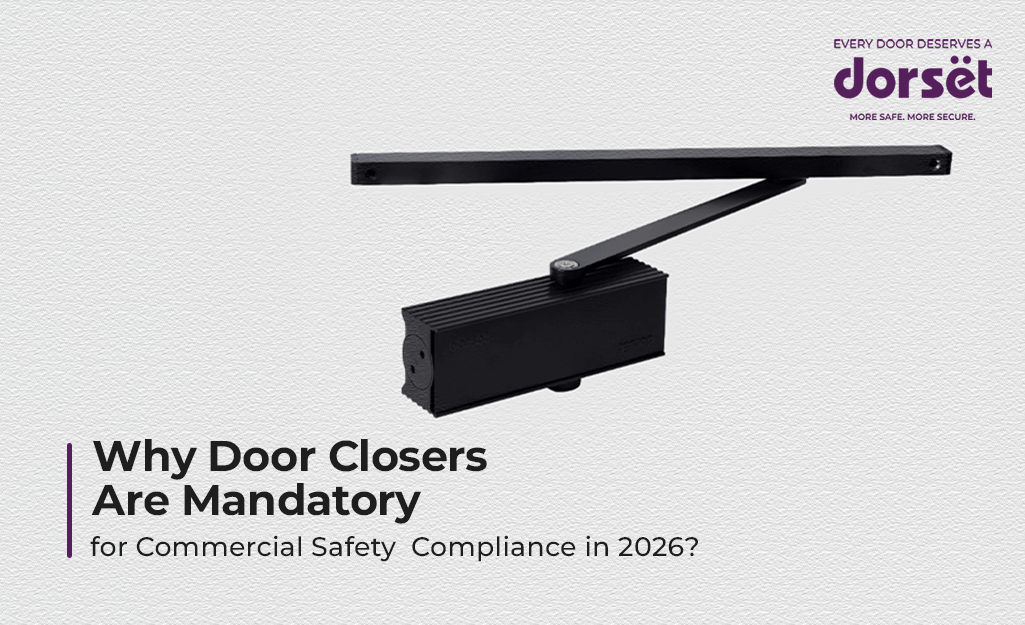
As we navigate through 2026, the standards for commercial building safety have reached new levels of scrutiny. Architects, facility managers, and safety officers are no longer just looking for functionality, they’re prioritizing comprehensive compliance. At the heart of this safety infrastructure lies a piece of equipment that is often overlooked until it fails, the door closer.
Whether it is preventing the spread of fire or ensuring that a secure entry point remains locked, the right door hardware is the unsung hero of the building management.
The Critical Role of Door Closers in Safety Compliance
When fire safety inspectors walk through a commercial facility, they are looking for passive fire protection. This refers to systems that compartmentalize a fire to prevent it from spreading throughout a structure. A fire rated door is only effective if it actually closes and latches when a fire alarm is triggered.
This is where door closer becomes a primary safety component. Without a reliable mechanism to return the door to its closed position after use, a fire rated door remains propped open, allowing smoke and flames to move freely between rooms.
In 2026, compliance standards dictate that all fire rated openings must be equipped with a functional closure system. This is why investing in high quality, certified door hardware is non-negotiable.
Choosing the Right Mechanism for Your Space
Not every opening requires the same type of closure. The aesthetic and functional requirements of your building will dictate which system you choose.
- The Concealed Door Closure: Installed inside the top rail of the door or within the head frame, a concealed door closer remains invisible when the door is closed, providing a seamless look that satisfies both architectural design requirements and safety mandates.
- Hydraulic Systems: Hydraulic door closer units are designed with adjustable valves that allow facility managers to fine tune the swing and latch speeds, ensuring that even the heaviest commercial doors close gently but firmly.
- The Automatic Door Closer: By automating the opening and closing process, you ensure that individuals with mobility issues can navigate your facility without assistance. Furthermore, an automatic improves hygiene by reducing the need for physical contact with door handles.
- Special Considerations for Wooden Doors: Selecting a door closer for wooden door installation requires specific technical attention. Wooden doors are susceptible to warping if the force of the closer is too high or if the mounting hardware is not installed correctly. When specifying a door closer for wooden door setups, it is essential to consider the door's weight and width.
Integrating Closers with Building Security
A building is only as secure as its weakest entry point. The door closer works in tandem with your safety door lock system to ensure the perimeter remains secure.
Consider a scenario where a staff member enters a restricted area but fails to pull the door shut behind them. If the closer is sluggish or fails to engage the latch, the room is left vulnerable. A robust safety door lock relies on the door being fully closed to engage the deadbolt or latch bolt. If the closer does not complete the cycle, the safety door lock cannot function.
This is why, in 2026, we see a trend toward integrated "smart" closures that report back to a central security hub. If a door is left ajar for more than a few seconds, the security system can trigger an alarm, alerting management to secure the entrance. This integration between the closure, the safety door lock, and the access control system is the future of facility management.
Maintenance and Compliance Standards
Regulations in 2026 require that all fire rated doors be inspected regularly. As part of these inspections, the functionality of the closer is tested. Facility managers should incorporate a seasonal check for all door hardware. This includes:
- Checking for hydraulic fluid leaks, which indicates a seal failure in a hydraulic door closer.
- Adjusting latching speeds for seasonal temperature changes as door seals can become stiffer in winter.
- Tightening mounting screws on every wooden door closer and metal door closer ensure there is no play in the mechanism.
Integrating Closers with Building Security
A building is only as secure as its weakest entry point. The door closer works in tandem with your safety door lock system to ensure the perimeter remains secure. A robust safety door lock relies on the door being fully closed to engage the deadbolt or latch bolt. If the closer does not complete the cycle, the safety door lock cannot function.
This is why, in 2026, we see a trend toward integrated smart closures that report back to a central security hub. If a door is left ajar for more than a few seconds, the security system can trigger an alarm, alerting management to secure the entrance.
The Future of Commercial Access
As we look deeper into the year 2026, we are seeing a push toward integrated, multi-functional building management. Modern commercial buildings are becoming intelligent ecosystems where every piece of hardware is connected.
When planning your next upgrade, consult with hardware professionals to ensure the systems you choose meet the latest fire and life safety codes. Do not settle for subpar components. The safety of your occupants depends on the reliability of your door systems. Invest in quality, prioritize regular maintenance, and ensure that your commercial property remains a gold standard for safety and accessibility.
FAQs
1. Why is a hydraulic door closer required for fire-rated doors?
A hydraulic door closer ensures that fire-rated doors return to a fully latched position after being opened. This is essential for fire safety compliance, as it maintains the fire compartment's integrity, preventing the spread of smoke and heat during an emergency.
2. Is a concealed door closer as effective as a surface-mounted one?
Yes, a concealed door closer can be just as effective as a traditional surface-mounted unit. The key difference is the installation method; concealed units are built into the door or frame. When installed correctly, they provide the same level of closing force and control, making them ideal for high-end aesthetic applications.
3. What should I check when installing a door closer for wooden door applications?
When installing a door closer for wooden door setups, always verify the weight of the door and the fire rating. Use reinforced mounting hardware to ensure the door does not splinter or warp, and ensure the closer's force is adjustable to match the door's resistance.
4. How does an automatic door closer improve commercial safety?
An automatic door closer improves safety by ensuring doors are closed consistently without human intervention, which is vital for fire prevention. Furthermore, it improves accessibility and hygiene in high-traffic areas, allowing for touch-free access that meets modern health guidelines.
5. How often should door hardware be inspected for commercial compliance?
Building codes generally require periodic inspections for all fire-rated assemblies. It is recommended to perform a comprehensive audit of all door hardware-including the latching speed, alignment, and physical condition of the closer-at least once every six months to ensure ongoing safety compliance.