If you manage or operate a commercial building, safety compliance is not just a responsibility but also a regulatory requirement that directly affects occupants, employees, and visitors. While doors themselves are often prioritised in safety planning, the hardware that supports how they function plays an equally important role in maintaining compliance.
Door closers are one such essential component that contributes significantly to both safety and regulatory alignment in commercial spaces. When installed correctly, they help make sure that doors function properly during both normal operations and emergency situations.
Understanding the Role of Door Closers
Before understanding their importance in compliance, it is helpful to know how door closers function in everyday commercial environments and why they are considered an important safety mechanism.
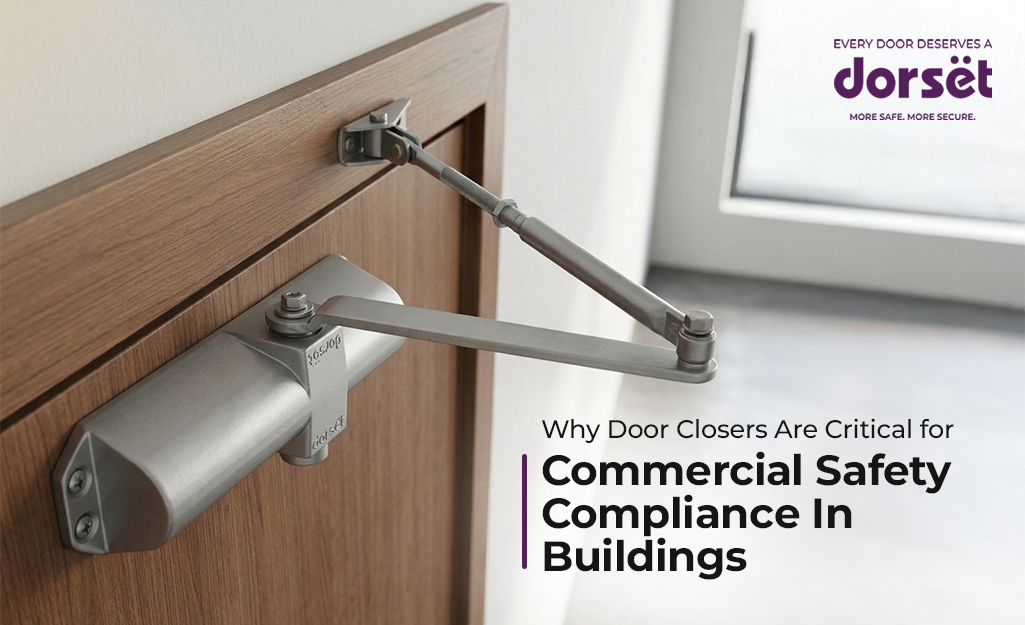
A mechanical or hydraulic door closer is a device that automatically closes doors after they are opened. They help make sure that the doors return to a closed position after they are opened, and also maintain their controlled movement.
This simple functionality plays a major role in maintaining building safety systems. In commercial settings, door closers are commonly installed on fire doors and emergency exit doors to make sure they consistently close.
Supporting Fire Safety Compliance
One of the primary reasons door closers are important in commercial buildings is their role in maintaining fire safety systems. Fire-rated doors are designed to slow the spread of fire and smoke, but they can only function effectively when they remain closed.
Door closers make sure that the fire-safety doors automatically close after use so they are properly sealed during emergencies, keeping the fire and smoke contained. Dorset’s door closers are also tested and certified to maintain their integrity in extreme heat that is generated in case of a fire, for up to 120 minutes.
Without a door closer, even a fire-rated door may fail to perform its intended protective role. This is why safety regulations often require self-closing doors in staircases, corridors, and exit routes.
Ensuring Safe Escape Routes
In emergency situations, safe evacuation depends on clearly defined and protected escape paths. Door closers help keep these pathways safe to move through by making sure doors are not left open unintentionally.
They support both smoke containment and fire compartmentalisation. By keeping escape routes protected, door closers allow occupants more time to exit safely. This makes them an important contributor in maintaining life safety systems.
Maintaining Building Integrity
Beyond fire safety, door closers contribute to the overall operational safety of commercial buildings.
Controlled door movement helps prevent sudden slamming and accidental damage to the lock or door’s mechanisms. This reduces wear and tear on the doors and frames while maintaining consistent performance. In busy commercial spaces, this reliability becomes especially important.
Compliance with Safety Standards
Commercial buildings are required to meet specific safety guidelines related to fire protection and emergency preparedness.
Door closers help the building infrastructure meet these expectations by supporting the requirement of self-closing doors.
This helps the buildings in meeting fire resistance standards and the safety certification requirements. Certified fire-rated door closers are tested to make sure they perform reliably under high-temperature conditions. Dorset’s fire-rated door closers are certified to hold their integrity under such conditions for up to 120 minutes. This makes them suitable for installation in critical areas such as staircases and lift lobbies.
Features That Support Compliance
Dorset’s door closers are designed with features that improve both safety and usability in commercial environments.
Controlled Closing Speed
Regulated closing speed helps make sure that the doors shut securely without creating hazards for users.
This supports:
- Safe everyday usage
- Consistent door positioning
Proper adjustment helps maintain functionality without compromising comfort.
Durable Construction
High-quality door closers are built to withstand frequent usage in busy commercial settings.
Durable materials help:
- Maintain performance over time
- Resist operational stress
For example, our Dorset Fire Rated Door Closers are designed with pressure die-cast aluminum bodies and high-quality hydraulic systems to give you long-term reliability.
Tested Reliability
Compliance requires dependable performance even under demanding conditions.
Fire-rated door closers undergo testing to make sure they give you consistent operation and proper resistance to heat exposure. Tested models are capable of maintaining performance across thousands of operational cycles.
Supporting Everyday Safety
In addition to regulatory compliance, door closers also improve daily operational safety within commercial spaces by making sure the doors close after every use. This way the entry points remain controlled and the likelihood of doors being left open unintentionally is reduced. Such consistency improves both security and safety within the building.
The Bottom Line
Door closers are more than just functional accessories in commercial buildings because they actively support safety compliance and emergency preparedness.
By making sure that doors close automatically and reliably, they contribute to fire protection systems and safe evacuation routes. When installed and maintained properly, they help buildings meet essential safety standards while supporting everyday operational reliability.
In commercial environments where safety compliance is critical, door closers remain an indispensable component of responsible infrastructure.
FAQ
1. What is a door closer and why is it used?
A door closer is a mechanical or hydraulic device that automatically closes a door after it is opened to maintain safety, security, and proper door control. Dorset offers fire-rated door closers designed for commercial and institutional buildings.
2. Why are door closers important in commercial buildings?
Door closers make sure the doors shut automatically after use, which is essential for maintaining fire safety systems and controlled access in busy commercial spaces. Dorset fire-rated door closers support safety compliance in commercial environments.
3. Are door closers required for fire safety compliance?
Yes, many building safety regulations require self-closing fire doors so they can contain fire and smoke during emergencies. Dorset fire-rated door closers are tested and certified to maintain integrity for up to 120 minutes in fire conditions.
4. How do door closers improve fire safety?
Door closers make sure fire doors automatically close and seal after opening, which helps prevent the spread of smoke and fire between different sections of a building.
5. Where are door closers usually installed in commercial buildings?
Door closers are typically installed on fire doors, emergency exit doors, staircases, and lift lobby doors where automatic closing is required for safety.