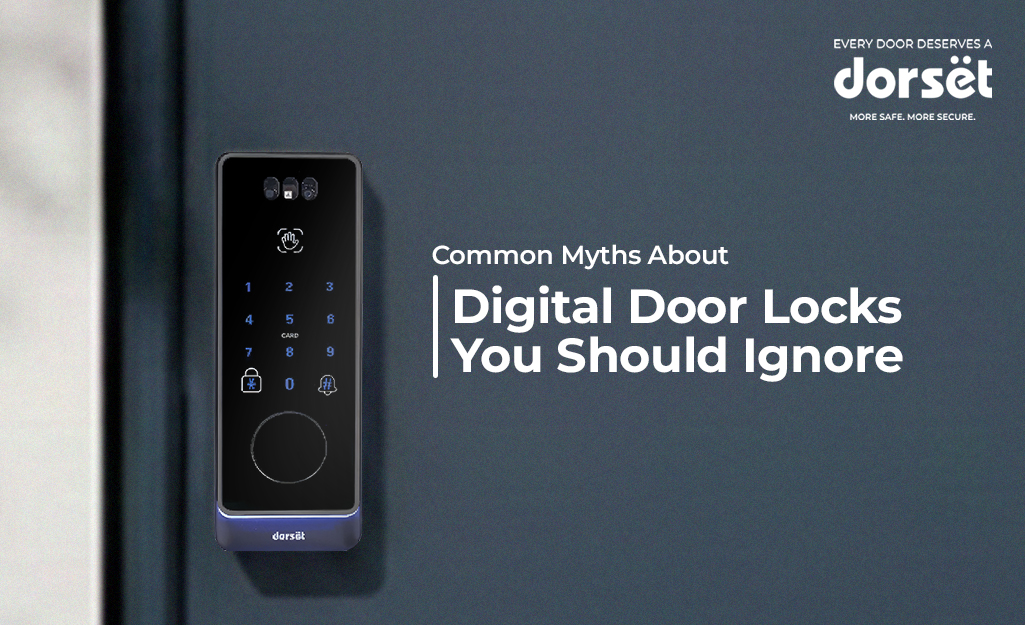
Digital door locks are becoming more common in modern homes, apartments, and even small offices. Yet, many people still hesitate before choosing one. Most of this hesitation does not come from real problems, but from myths that have been repeated for years. Some sound logical. Some come from early versions of smart locks. Others are simply misunderstandings.
So let’s clear the air. Here are some of the most common myths about digital door locks, and why they should not stop you from considering one.
Myth 1: Digital Door Locks Are Not Safe
This is probably the biggest myth of all. Many people assume that because a lock is digital, it must be easier to break into or hack.
In reality, most break-ins still happen because of weak mechanical locks, poor installation, or forced entry. Digital locks are designed with multiple layers of security. These include strong mortise mechanisms, encrypted communication, and access logs.
Dorset digital locks are built on solid mechanical locking systems with advanced digital security layered on top, making them as secure, and often more secure, than your average mechanical lock.
Myth 2: Digital Locks Stop Working If There Is a Power Cut
Power cuts are common in many parts of the country, so this concern is understandable. People worry that if the electricity goes out, they will be locked out of their own home.
The truth is that digital door locks do not rely on your home’s power supply. They run on internal batteries. Even if there is a long power cut, the lock continues to work normally.
Most digital locks also give low-battery warnings well in advance, and many include emergency power options or mechanical key access.
Myth 3: Digital Door Locks Are Complicated to Use
There is a belief that digital locks are only for tech-savvy users. Some people imagine confusing apps, complex settings, and constant troubleshooting.
In daily use, digital locks are often simpler than traditional ones. You do not need to search for keys, worry about losing them, or carry multiple copies. Fingerprint access, PIN codes, or mobile unlocking are quick and intuitive.
Once set up, most users find digital locks easier than conventional locks.
Dorset digital locks are designed for everyday users, with easy-to-use access methods like fingerprint, PIN, face recognition, and more that feel natural and simple.
Myth 4: Fingerprint Locks Fail Often
Some people worry that fingerprint sensors will not work if fingers are wet, dusty, or slightly worn. This fear usually comes from older technology or low-quality sensors.
Fingerprint sensors on Dorset digital locks are far more advanced. They read patterns quickly and accurately. Our digital locks also allow multiple access modes, so users are never dependent on just one method.
Myth 5: Digital Door Locks Are High Maintenance
Many assume that digital locks require constant servicing, frequent battery changes, or technical support.
In practice, digital locks need very little maintenance. Battery changes are required only after long intervals, and routine care is minimal. There are no keys to replace, no cylinders to rekey, and fewer moving parts exposed to wear.
Most issues that do occur are simple, like battery replacement or app updates.
Dorset digital locks are designed for long-term daily use with minimal maintenance and clear alerts for anything that needs attention.
Myth 6: Digital Locks Are Just a Luxury, Not Practical
Some people see digital locks as a luxury feature rather than a practical one. They feel traditional locks are “good enough.”
But when you look at daily life, the practical benefits become clear. No more lost keys. No need to make spare keys. Easy access for family members. Temporary access for guests or staff. Better control and peace of mind.
These are everyday conveniences, and not luxury benefits. Dorset digital locks are built to solve real, everyday access and security problems, not just to look tech-savvy.
Why These Myths Still Exist
Most myths around digital door locks come from outdated information or early products that lacked today’s technology. Like any evolving product, digital locks have improved significantly over time.
Better sensors, stronger mechanical cores, smarter software, and user-focused design have changed how these locks perform in real homes.
Make an Informed Choice
Choosing a door lock is about trust, reliability, and how well it fits into your daily routine. Myths can make digital locks seem risky or unnecessary, but the reality is very different.
At Dorset, we design digital door locks to balance technology with solid hardware fundamentals. The goal is not to replace security with gadgets, but to improve it with smarter access and better control.
When you look beyond the myths, digital door locks are simply another step forward in how doors work for people today.
And like any good hardware choice, the right one should make life easier, safer, and more comfortable, without demanding constant attention.
FAQ
1. Are digital door locks actually safe for homes?
Yes, modern digital door locks use strong mechanical locking systems combined with advanced digital security like encryption and access logs, making them highly secure. Dorset digital door locks are built with high-quality mortise mechanisms with multiple secure ways to digitally access the lock.
2. What happens to a digital door lock during a power cut?
Digital door locks work on internal batteries, not your home’s electricity, so they continue to function even during long power cuts. Dorset digital locks also provide low-battery alerts and emergency access options for added reliability.
3. Are digital door locks difficult to use on a daily basis?
No, most digital locks are designed for simple everyday use and are often easier than traditional keys. Dorset digital locks offer easy access through fingerprint, PIN, face recognition, and mobile options that feel natural to use.
4. Do fingerprint door locks fail if fingers are wet or dusty?
Modern fingerprint sensors are highly accurate and designed to read prints quickly even in less-than-perfect conditions. Dorset digital locks use advanced 360° fingerprint sensors and also offer multiple access modes so users are never locked out.
5. Are digital door locks high maintenance compared to mechanical locks?
No, digital locks usually require less maintenance since there are no keys to replace or cylinders to rekey. Dorset digital locks are built for long-term daily use with simple upkeep and clear alerts when attention is needed.