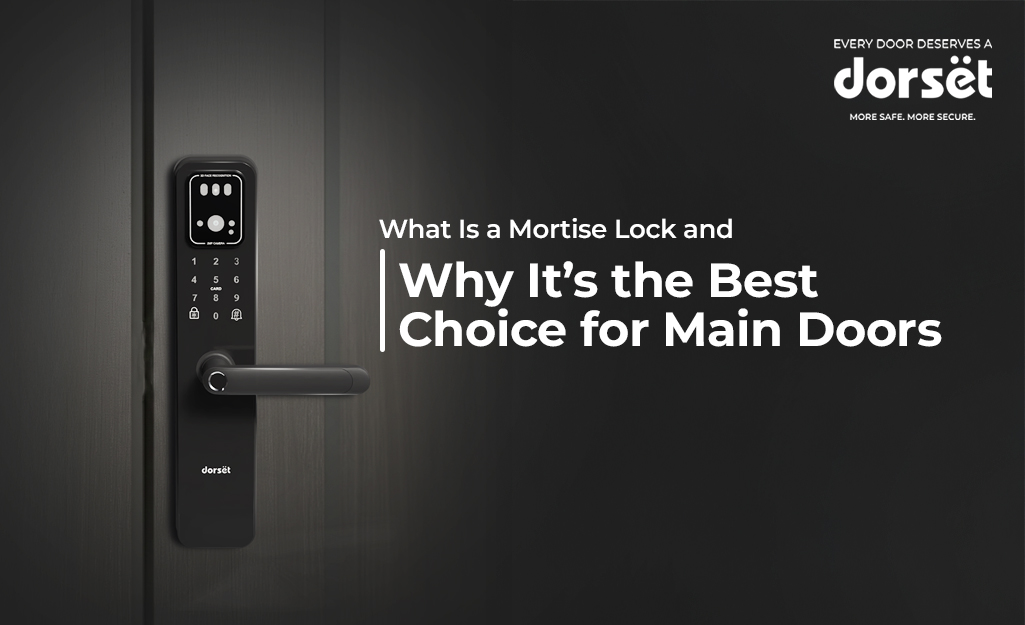
Mortise locks are probably one of the most common types of locks you find in Indian homes, especially on main doors. But have you ever wondered why that is? What exactly are mortise locks, and how do they work so well that people have trusted them for decades?
To understand why they are so widely used as locks for main door, let’s see how mortise locks are built and what makes them different from other locking systems.
What Exactly Is a Mortise Lock?
A mortise lock is a type of lock that is installed inside the door itself. Instead of being fixed on the surface, the lock body sits inside a rectangular pocket, called a mortise, cut into the edge of the door. Only the faceplate, handle, and key cylinder remain visible from the outside.
Because the lock is embedded within the door, it becomes part of the door’s structure rather than an add-on like a rim lock. This makes mortise locks inherently stronger and more stable than many other locking systems.
Mortise locks are commonly used for:
- Main entrance doors
- Heavy wooden or metal doors
- High-traffic residential and commercial doors
They are known for their solid feel, precise movement, and ability to handle repeated use without loosening or sagging over time.
How Are Mortise Locks Different From Other Locks?
The biggest difference lies in construction and load handling. Mortise locks have a larger internal mechanism compared to cylindrical or rim locks. This allows them to house stronger bolts, heavier latches, and more complex locking functions.
Because they sit inside the door, the force applied while locking, unlocking, or even attempting a forced entry is distributed through the door rather than concentrated on surface screws. This makes a mortise lock door far more resistant to impact, prying, and long-term wear.
For a main door that opens and closes multiple times a day, this difference becomes very noticeable over the years.
Types of Mortise Locks You Can Choose From
Mortise locks are not one-size-fits-all. They come in several variations, each designed for specific needs and door functions.
Lever Mortise Locks
These combine a latch and locking bolt, operated using a handle and key. They are commonly used for residential main doors where convenience and security need to work together.
Heavy Duty Mortise Locks
Designed for larger and heavier doors, these are some of the best mortise locks to handle higher stress and frequent usage. They are ideal for main entrances, villas, and frequently used doors.
Multi-Pin Mortise Locks
These use multiple pins inside the cylinder, making them harder to pick and more secure against tampering.
Magnetic Mortise Locks
A modern option where the latch stays flush inside the door when open and pops out only when the door closes. This gives a clean look while maintaining solid locking performance.
Roller Latch Mortise Locks
These allow the door to close smoothly without needing a handle to engage the latch, often used where convenience is important.
Mortise Deadlocks
These use a solid bolt without a spring latch, providing extra security when locked. Many main doors use a combination of latch and deadlock for added safety.
Each type serves a different purpose, but they all share the core benefit of being strong, internal, and reliable.
Why Mortise Locks Are Ideal for Main Doors
Main doors face more stress than any other door in a home. They are heavier, exposed to weather changes, and used frequently. Mortise locks are built to handle all of this.
They offer:
- Better resistance to forced entry
- Stronger bolt engagement into the frame
- Long-term durability without loosening
- Smooth operation even after years of use
Because the lock body is supported by the door itself, mortise locks do not wobble or shift over time. This keeps the door alignment intact and ensures the locking action remains smooth and precise.
Door Compatibility and Installation Considerations
When selecting a mortise lock, a few practical factors need attention. These will make sure that your lock performs as intended and fits the door correctly.
Material of the Door
Mortise locks work well with both wooden and metal doors. The internal installation provides strength regardless of material.
Door Thickness
Dorset mortise locks are designed for door thicknesses ranging from around 35 mm to 75 mm. Choosing the right size will give you proper fitting and smooth handle movement.
Opening Direction
Left-hand and right-hand door openings matter. Mortise locks are designed to suit both, but orientation needs to be selected correctly.
Single or Double Leaf Doors
Main doors may be single or double leaf. The locking system should be compatible with how the door closes and aligns with the frame.
Taking these factors into account will give you a lock that feels natural to use and performs reliably over time.
Long-Term Value and Reliability
While mortise locks may require more precise installation than simpler rim locks, they repay that effort with long-term performance. They are less likely to fail, loosen, or need frequent replacement.
For main doors, this makes them a smart investment. Instead of replacing surface-mounted locks every few years, a well-chosen mortise lock can last for decades with minimal maintenance.
Final Thoughts
A main door deserves more than a basic locking solution. It needs a system that can handle weight, frequent use, and security demands without compromise. Mortise locks meet all these requirements with ease.
By being built into the door, they offer strength, durability, and a refined user experience that other locks struggle to match. That is why mortise locks for main door are preferred across homes, apartments, and commercial spaces.
At Dorset, we believe a good lock should work quietly in the background while giving you complete peace of mind. And for main doors, a well-designed mortise lock does exactly that.
FAQ
1. What is a mortise lock and how does it work?
A mortise lock is installed inside the door body, making it part of the door structure and providing stronger locking and smoother operation. Dorset mortise locks are engineered with solid internal mechanisms for long-term reliability on main doors.
2. Why are mortise locks preferred for main doors?
Main doors are heavier and used frequently, so they need stronger locking systems that can handle stress over time. Dorset mortise locks offer better resistance to forced entry and stable performance for main entrances.
3. Are mortise locks more secure than rim or cylindrical locks?
Yes, mortise locks distribute force through the door instead of surface screws, making them harder to break or pry open. Dorset mortise locks use hiqh-quality bolts and precision engineering for enhanced security.
4. Can mortise locks be used on both wooden and metal doors?
Mortise locks work well on wooden and metal doors because they are installed internally and supported by the door structure. Dorset mortise locks are designed to suit both materials without compromising strength or fit.
5. What types of mortise locks are best for main doors?
Lever mortise locks, heavy-duty mortise locks, and mortise deadlocks are commonly used for main doors due to their strength and durability. Dorset offers a wide range of mortise lock options suited for different main door needs.